Austin, Texas
Audition Prep and Performance Coaching in Austin
Audition prep coaching in Austin is deadline driven work with a different rhythm from open ended lessons. The goal is not a better voice in six months, it is the best possible performance on one specific date.
- Song selection matched to the specific audition
- 16 bar and 32 bar cuts that actually land
- Rehearsal under realistic pressure, not just repetition
- Nerves treated as physiology, not a pep talk
Book Audition Prep
Tell us what you want to work on. We reply within one business day.
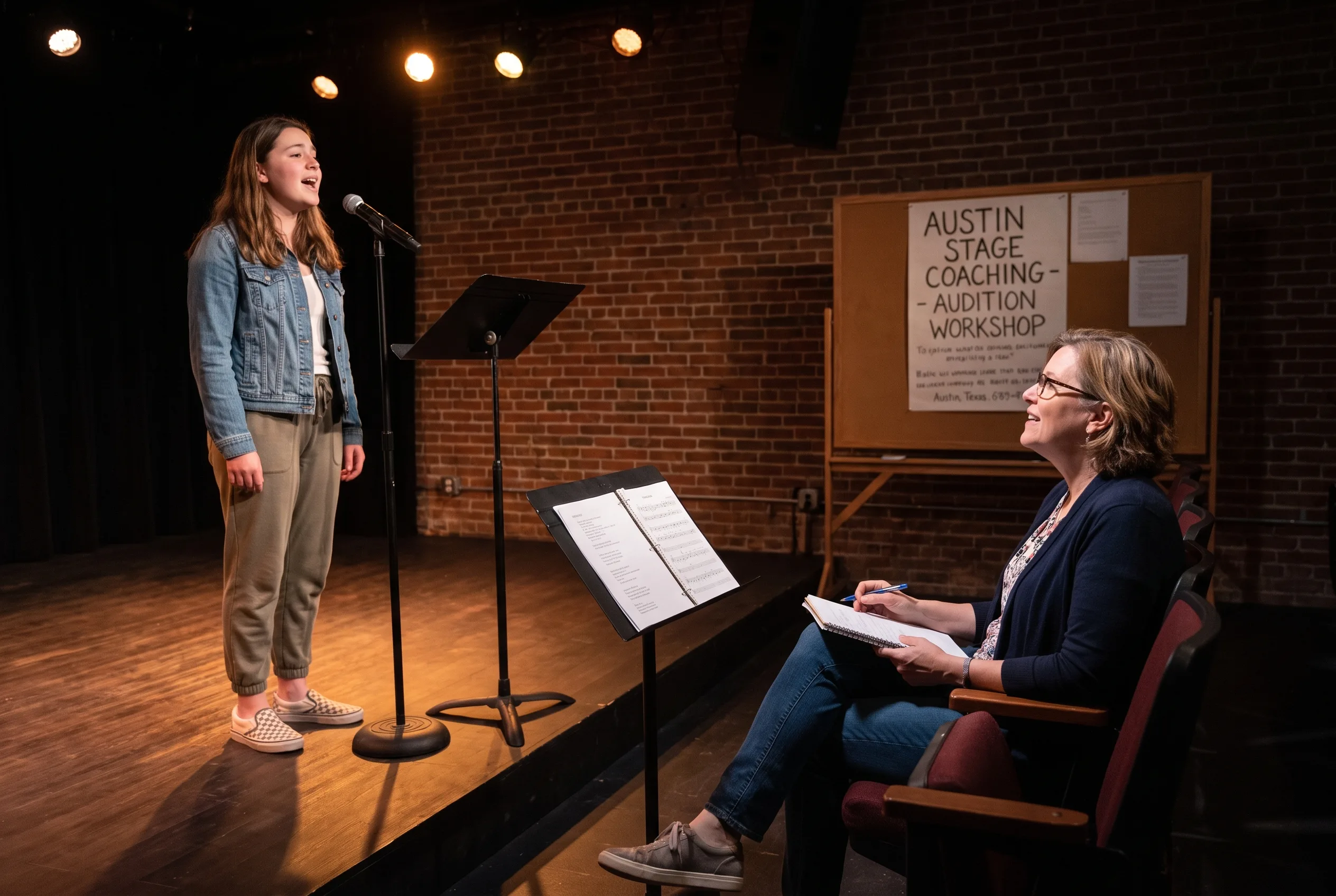
What Audition Prep Coaching Includes
Most singers who lose auditions do not lose them on vocal quality. They lose them on choices made weeks earlier: the wrong song, a cut that starts in a dull place, material that exposes a weakness in the first eight bars, or a performance rehearsed so narrowly that any deviation on the day collapses it. Audition coaching addresses the whole package.
- Repertoire selection. Choosing material that fits both your voice and the specific casting, and that shows range without wandering into anything unreliable.
- Cuts and edits. Building 16 bar and 32 bar versions that open strongly, arrive somewhere, and end cleanly.
- Technical security. Making sure every note in the cut is reliable on a bad day, not just on a good one.
- Performance craft. What you do in the first three seconds, how you handle the accompanist or the track, and how you finish and leave.
- Pressure rehearsal. Practising under conditions designed to be uncomfortable, so the real room is easier than rehearsal was.
Signs You Need Audition Coaching
- You have an audition date and no clear plan for the weeks leading up to it
- You consistently perform worse in auditions than in rehearsal
- You are not sure which of your songs is the right one to bring
- You have been cut early repeatedly without knowing why
- Your cut feels arbitrary, starting and stopping in odd places
- Nerves reliably take the top of your range away on the day
Why Cuts Matter More Than Singers Expect
Sixteen bar and thirty two bar cuts remain the standard formats in musical theatre auditions, and the edit is a technical decision in its own right. A panel may hear well over a hundred singers in a day, and the first few seconds carry disproportionate weight. A cut that opens on a low, quiet pickup phrase wastes that window. A cut that ends mid thought reads as unprepared, regardless of how well it was sung. Building an edit that starts in an interesting place, contains one clear moment of arrival, and finishes deliberately is often the highest leverage change available in the final fortnight before an audition.
The Preparation Timeline
Six to eight weeks out, choose material
Selection is made against the specific opportunity: what the casting actually needs, what your voice does reliably, and what will not expose an unstable note. If a song is nearly right but sits badly, this is when we find out.
Four to six weeks out, build the cut
The edit is constructed and tested aloud rather than on paper. We check the entry point, the arrival, and the ending, and confirm the accompaniment makes sense to a pianist reading it cold.
Three to four weeks out, secure the technique
Every difficult moment in the cut is drilled until it is reliable when you are tired, cold, or distracted. Auditions rarely happen under ideal vocal conditions.
Two weeks out, rehearse under pressure
Run throughs with deliberate disruption: standing further away, singing after physical exertion to mimic adrenaline, being interrupted and restarting, performing for someone unfamiliar. The aim is to make the real room feel easy.
Final week, taper and protect
Volume of practice comes down rather than up. The final week is about vocal freshness and consistency, not extra work, and singers who cram in this window routinely arrive tired.
Audition Types and What Each Rewards
| Audition type | What the panel is listening for | Preparation emphasis |
|---|---|---|
| Musical theatre casting | Character, storytelling, and whether you fit the role as much as vocal quality | 16 or 32 bar cut, acting through song, contrasting second selection ready. |
| School or UIL solo | Accuracy, tone, musicianship, and adherence to the required repertoire list | Technical precision and consistency. Judged against a rubric rather than a role. |
| College music program | Trainability and raw potential more than finished polish | Repertoire showing range and control, plus prepared answers about your goals. |
| Band or session vocalist | Reliability, blend, pitch under monitoring problems, and how easy you are to work with | Sight reading or fast learning, harmony, and stamina across a long call. |
| Open mic or showcase | Whether the room stays with you for the whole song | Song order, pacing, and stage presence more than vocal difficulty. |
Nerves Are Physical, So We Treat Them Physically
Performance anxiety is reported by a majority of professional musicians in survey research, so it is close to universal rather than a personal failing. It also has direct physical consequences for singing: the stress response raises laryngeal tension, shortens and shallows the breath cycle, redirects blood flow, and dries the vocal folds. Every one of those measurably degrades tone and range. That is why reassurance alone does not work. We use breath protocols that lengthen the exhale, rehearsal designed to blunt the novelty of the room, and a pre performance routine short enough to actually complete backstage.
What Affects Audition Coaching Pricing
- Timeline. Compressed preparation inside two or three weeks usually requires more frequent sessions than a two month runway.
- Number of pieces. Preparing one cut is a smaller job than assembling a contrasting book of several.
- Session frequency. Twice weekly in the final month costs more per month than a weekly cadence.
- Materials work. Building and notating cuts for an accompanist takes time beyond the lesson itself.
Auditioning in the Austin Market
Austin offers a broader mix of audition opportunities than its size suggests, and preparation should be matched to which one you are walking into. The area supports an active community and professional theatre scene, school and UIL competition provides fixed annual deadlines for student singers, and Austin's standing as a film and television production hub creates periodic casting calls where the read matters as much as the voice. On the music side, the city's live scene means many auditions are effectively working tryouts with a band rather than formal panel auditions, which rewards reliability, harmony skills, and stamina over a long call far more than a polished sixteen bars. Knowing which of these you are preparing for changes almost every decision.
Why students choose us
Why Singers Choose Us for Audition Prep
The Cut Is Treated as a Technical Decision
Sixteen and thirty two bar cuts are the standard audition formats, and a panel hearing a hundred singers gives you seconds to register. We build edits that open in an interesting place, contain one clear arrival, and end deliberately, then test them aloud rather than on paper. In the final fortnight, fixing a weak cut usually beats any further vocal work.
Nerves Get Physical Solutions
Performance anxiety is reported by most professional musicians, and it degrades singing through measurable physiology: raised laryngeal tension, a shortened breath cycle, and drier vocal folds. Reassurance does not reverse any of that. Preparation here uses breath protocols, deliberately disrupted rehearsal, and a backstage routine short enough to actually finish.
Preparation Peaks on the Right Day
The most common self directed mistake is increasing practice in the final week and arriving vocally tired. Coaching here follows a deliberate taper, with load coming down as the date approaches so the voice is fresh when it counts. Every difficult moment in the cut is drilled until it holds on a bad day, because auditions rarely land on a good one.
Frequently Asked Questions
How far in advance should I start audition preparation?
Six to eight weeks is comfortable for a single audition, allowing time to select material, build the cut, secure it technically, and rehearse under pressure. Shorter runways are workable but usually mean choosing safer repertoire and accepting less technical change.
What is a 16 bar cut and why does it matter?
It is a short excerpt, roughly sixteen bars, used as a standard musical theatre audition format. It matters because a panel hearing a hundred singers forms an impression in seconds, so where the cut starts, what it builds to, and how it ends carry disproportionate weight.
I sing well in rehearsal and badly in auditions. Can that be fixed?
Usually yes, because it is a physiological problem rather than a character flaw. The stress response raises laryngeal tension, shortens the breath, and dries the folds. We use breath protocols and deliberately uncomfortable rehearsal so the audition room is less novel than practice was.
Can you help me choose my audition song?
Yes, and it is often the highest value part of the process. Selection weighs what the specific casting needs, what your voice does reliably under pressure, and what avoids exposing an unstable note in the opening bars.
Do you coach for college music program auditions?
Yes. College auditions tend to reward trainability and potential more than finished polish, so preparation focuses on repertoire that demonstrates range and control, plus readiness for the interview questions that usually accompany them.
How often should I have lessons before an audition?
Weekly through most of the preparation, often moving to twice weekly in the final month when a fixed date is driving the work. The final week deliberately reduces load so you arrive vocally fresh rather than over rehearsed.
Related Services
Theatre auditions usually pair with musical theatre voice coaching. Group settings give useful low stakes performance repetitions, covered in group singing classes and workshops. Student performers should see kids and teens voice lessons, and singers needing underlying technical work first should start with private voice lessons or advanced vocal coaching.
Ready when you are
Book Audition Preparation
Tell us the date and what you are auditioning for, and we will build the plan backwards from it.
Book Your First Lesson Call (512) 555-0142