Austin, Texas
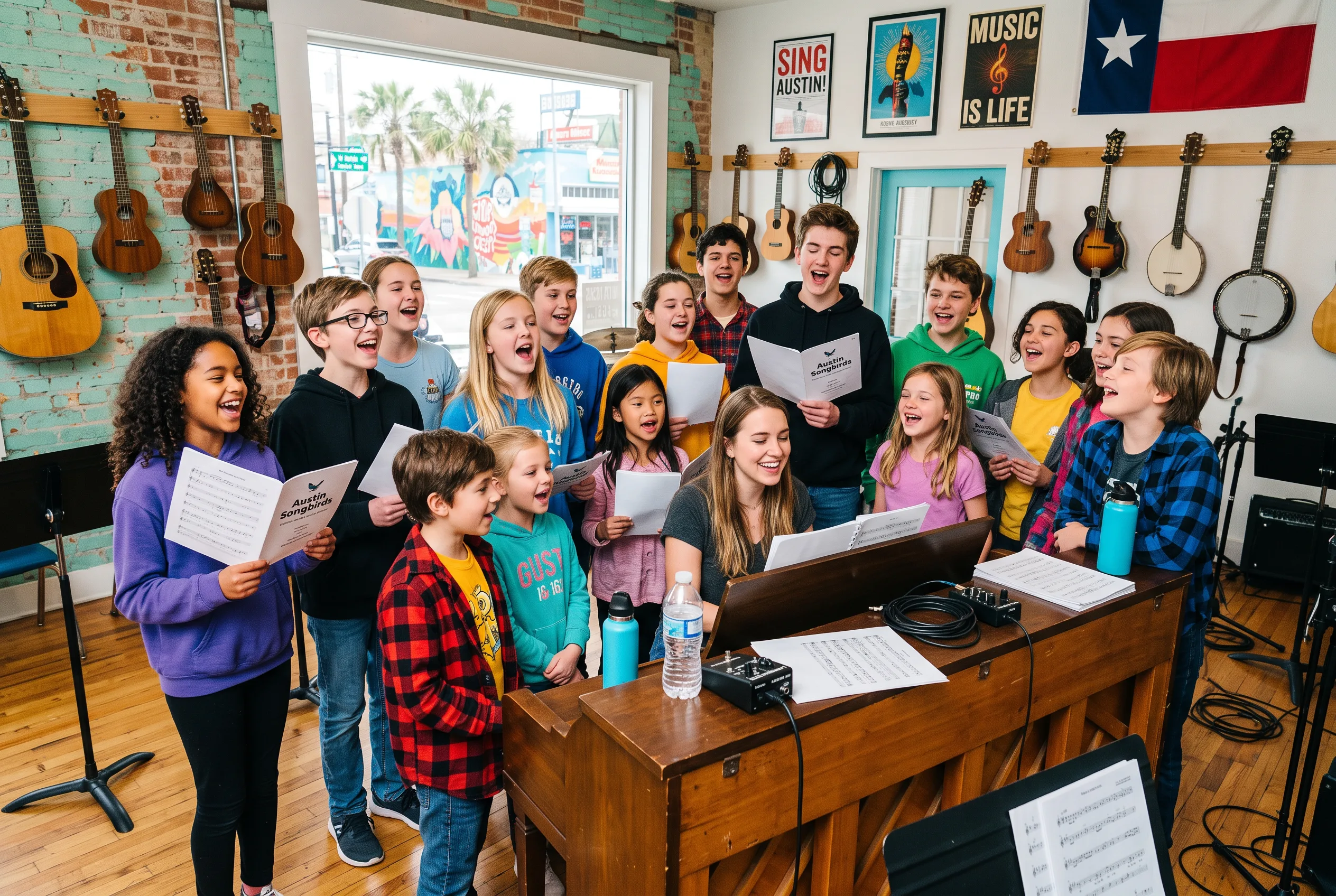
Kids and Teens Voice Lessons in Austin
Kids and teens voice lessons in Austin need to do two things at once: build real technique, and protect an instrument that is still changing. Pushing range and volume in a young voice is the fastest way to cause problems later.
- Ages 7 and up, with technique matched to development stage
- Voice change handled carefully, especially for teen boys
- Confidence and musicianship, not just range
- Support for school choir, UIL, and theatre auditions
Book a Lesson for Your Child
Tell us what you want to work on. We reply within one business day.
What Kids and Teens Voice Lessons Include
Young voices are not small adult voices. The instrument is physically different, it is changing on its own schedule, and the attention span it comes attached to is shorter. Lessons are built accordingly, and the content shifts substantially across three broad stages.
- Ages 7 to 10. Pitch matching, rhythm, basic posture, and a great deal of play. The priority is accurate ear training and a positive relationship with singing, not vocal power.
- Ages 11 to 14. Breath management is introduced properly, along with early register awareness. This is where the voice change begins for many students, and repertoire has to be reassessed frequently.
- Ages 15 to 18. Technique starts to resemble adult work, with attention to register blending, stamina, and audition preparation for school programs, theatre, or college applications.
Across all three stages, lessons include musicianship rather than only vocal technique, because a young singer who can hold a part, count accurately, and hear harmony is far more useful in a choir or a cast than one who can simply sing loudly.
Signs Your Child Is Ready for Lessons
- They sing constantly, around the house or in the car, without being asked to
- They have joined or want to join a school choir, theatre program, or church group
- They can hold attention on a task for around thirty minutes with an adult they do not know well
- They are frustrated that their voice does not do what they hear in recordings
- A teen is straining, going hoarse after rehearsals, or losing notes they used to have
- They have an audition coming up and no preparation strategy
Structured voice lessons generally suit ages seven and up. Younger children are usually better served by general musicianship and play based pitch work than by formal vocal technique, because the instruction requires a level of body awareness that is not typically available yet.
Handling the Voice Change
The adolescent voice change is the single most mishandled stage in youth singing, and it deserves plain explanation. In boys, the larynx grows substantially and the speaking pitch typically drops by around an octave, usually over a period of one to two years. During that time the voice can be unpredictable from week to week: notes that worked last month vanish, the break moves, and control fluctuates. Girls experience a change too, generally less dramatic but real, often bringing a temporary breathiness and a shifting register transition.
The correct response is to reassess repertoire regularly, keep singing within whatever range currently works comfortably, and stop treating lost notes as a failure. The damaging response, unfortunately common, is to push for the notes the student used to have. That is how young singers acquire strain habits that follow them into adulthood, and it is also how they quit.
How Lessons Are Structured
Meet and assess
A relaxed first session establishing what the student can currently do, what they enjoy singing, and what they want out of it. Parents are welcome to sit in on the first lesson, and many students prefer them not to after that.
Set a goal the student cares about
Motivation in young students comes from their goal, not their parents' goal. A specific target such as a school audition, a solo, or a song they want to perform produces far better practice than an abstract instruction to improve.
Short, frequent practice
Practice assignments are deliberately brief, typically ten to fifteen minutes, because short daily work consistently outperforms one long session and because a young voice fatigues faster than an adult one.
Regular reassessment
Range and comfortable repertoire are checked often, particularly through adolescence, so that material is always chosen for the voice as it is now rather than the voice it was six months ago.
Performance preparation when wanted
Auditions, recitals, and school productions are prepared specifically, including the nerves side, which for young performers is usually the larger obstacle.
Lesson Options by Age and Goal
| Student | Suggested format | Notes |
|---|---|---|
| Age 7 to 10, new to singing | 30 to 45 minutes, weekly | Attention span, not vocal stamina, is usually the limiting factor at this age. |
| Age 11 to 14, choir member | 45 minutes, weekly | Complements choir well. Choir teaches blending, private lessons develop the individual voice. |
| Teen boy in voice change | 45 minutes, weekly, with frequent range checks | Repertoire reassessed regularly. Consistency matters more than progress during this period. |
| Age 15 to 18, audition focused | 60 minutes, weekly or twice weekly near the date | Includes song selection, cuts, and performance rehearsal under pressure. |
| Any age, trying it out | 45 minutes, monthly block | A month is usually enough to tell whether the student is genuinely interested. |
What Affects Pricing for Young Students
- Lesson length. Shorter lessons for younger students cost less, and are often more effective than a full hour.
- Term blocks. Booking by school term usually carries a lower per lesson rate and helps keep a consistent slot.
- Scheduling. After school and early evening slots are the most requested and fill first.
- Audition intensives. Short bursts of increased frequency before a specific audition are priced separately from ongoing lessons.
Singing for Young People in Austin
Central Texas gives young singers an unusual number of outlets, and a matching amount of pressure. Austin area school districts run competitive choir programs, with UIL solo and ensemble contests providing a concrete deadline that focuses practice, and the region has an active youth and community theatre scene supplying regular audition opportunities. That is genuinely good for development, since young singers improve fastest when they have something specific to prepare for. The risk is volume of commitment: a teenager in choir, a school musical, and a church group simultaneously can be singing most days of the week, often with minimal technical supervision, during exactly the developmental window when the voice is least stable. Managing total vocal load across all of it is a frequent topic in lessons here.
Why students choose us
Why Austin Parents Choose Voice Coach Austin
The Voice Change Is Handled, Not Ignored
A boy's speaking pitch typically drops by around an octave through adolescence, and during that period notes disappear unpredictably. Lessons respond by reassessing range often and choosing repertoire for the voice as it is today. We will not push a student to reclaim notes their instrument has temporarily moved past, because that is how lasting strain habits and quitting both begin.
Honest Advice About Readiness
Structured lessons generally suit ages seven and up, once a student can hold focus for half an hour and act on instruction about breath and posture. If a child is younger than that, we will say that general musicianship would serve them better right now rather than take the booking. Readiness is about developmental stage, not talent.
Practice Designed for Real Attention Spans
Practice assignments are short and specific, usually ten to fifteen minutes, because distributed practice beats long sessions and because young voices fatigue sooner than adult ones. Goals are set around something the student actually cares about, such as a school audition or a song they chose, since that is what determines whether practice happens at all.
Frequently Asked Questions
What age can my child start voice lessons?
Structured voice lessons generally suit ages seven and up, when a child can sustain focus for around half an hour and understand instruction about breath and posture. Younger children usually benefit more from general musicianship and play based pitch work than from formal vocal technique.
Is it safe for a teenager to take voice lessons during the voice change?
Yes, and it is arguably the most useful time to have guidance. The risk during the voice change is not singing, it is singing repertoire that no longer fits. Lessons reassess range frequently and keep material inside what currently works comfortably.
Can you help my child prepare for a school choir or theatre audition?
Yes. Audition preparation covers song selection matched to the specific audition, cuts, and rehearsal under realistic pressure. For young performers, nerves are usually a bigger obstacle than technique, so we prepare for that directly.
Do parents sit in on lessons?
Parents are welcome in the first lesson. After that it varies by student. Some are more willing to make mistakes without an audience, and making mistakes is how voice lessons work, so we follow the student's preference.
How much should my child practise?
Ten to fifteen minutes most days is more effective than an hour once a week, both because distributed practice produces better motor learning and because young voices fatigue faster. Assignments are set to fit that.
My child says they are shy about singing. Is a private lesson too intense?
Private lessons are usually easier for shy students than group settings, because nobody else is listening. The first session is deliberately low pressure, and there is no requirement to perform for anyone until the student wants to.
Related Services
Teens preparing for school or community theatre should also see musical theatre voice coaching and audition prep and performance coaching. Adults in the same household often start with singing lessons for beginners. If scheduling around school activities is difficult, online voice lessons remove the commute. Get in touch to talk through what suits your child.
Ready when you are
Book a First Lesson for Your Child
A relaxed first session to see where their voice is now and whether lessons are a good fit.
Book Your First Lesson Call (512) 555-0142